

The Canadian Federal Election Day on September 20 is fast approaching. While The Blue Mountains Chamber of Commerce is proud to have hosted all-candidates debates in anticipation of previous elections, time constraints and provincial health and safety restrictions prohibited it this time. Instead, we asked each Simcoe-Grey candidate three key economic questions, which we feel are the most relevant and representative of our membership’s concerns and interests. Please note that these answers are provided verbatim, and any spelling/ grammatical errors are from the original, unedited submissions.
Here are their answers:
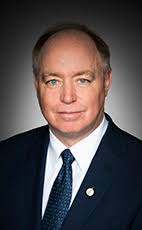

Phone: 705-435-1809
1) What is the Candidate’s view on the impact of COVID-19 on small business, and what are your priorities in supporting regional economic recovery? What role should vaccine passports play in that recovery?
Answer: The impact of COVID-19 has had a tremendously negative impact on many businesses across Simcoe-Grey. In areas like Blue Mountains, with a primary focus on tourism, it has been devastating. In fact, it was leaders like Andrew Siegwart who first reached out to my office as the pandemic was just taking hold to seek help navigating Ottawa and getting action from the Liberal government. We got some action, but there was no consultation with actual businesses, none with the opposition parties, and the programs that resulted were scattered, difficult to access, and – in some cases – almost complete failures with little uptake at all. The programs were certainly better than nothing, but if the government would have reached out to opposition parties, then organizations like the Blue Mountains Chamber of Commerce could have provided valuable input into their design.
Our Conservative platform places a tremendous focus on economic recovery and on small businesses like those that make up Blue Mountains. Our plan to get Canadians working again has four main tenants. First, there is the Canada Job Surge, which will pay up to 50% of the salary of new hires for six months following the end of CEWS. Second, the Canada Investment Accelerator will get companies spending money and creating jobs by providing a 5% investment tax credit for any capital investment made in 2022 and 2023, with the first $25,000 to be refundable for small business. Third, our Rebuild Main Street Tax Credit will really have an impact here. It will provide a 25% tax credit on amounts of up to $100,000 that Canadians personally invest in a small business over the next two years, to get money flowing into main street businesses and create jobs. Finally, our Main Street Business Loan will provide loans of up to $200,000 to help small and medium businesses in hospitality, retail, and tourism get back on their feet, with up to 25% forgiven.
But that is not all. If elected, we will implement a GST holiday for one month to help accelerate retail sales. We will also reform BDC to make it guarantee a portion of its loans for small businesses. Further, we will appoint a Minister of Red Tape Reduction whose mandate will be ensuring that any red tape that can be eliminated is eliminated. We will overhaul the tax system, to make it easier for individuals and small businesses, and we will actively work with the provinces to remove provincial trade barriers. Specifically for the hospitality and tourism industry, we will introduce a Dine and Discover Program. This program will provide a 50% rebate for food and non-alcoholic drinks purchased for dine-in from Monday to Wednesday for one month once it is safe to do so, pumping nearly $1 billion into this sector. We will launch the Explore and Support Canada initiative with a 15% tax credit for vacation expenses of up to $1,000 per person for Canadians to vacation in Canada in 2022, helping our tourism sector get back on its feet. We will also eliminate the unpopular Liberal escalator tax on alcohol. There is even more, but in the interest of space, I will encourage everyone to go and read our plan for themselves. You can find it at Conservative.ca/plan.
I am tremendously saddened that the Liberals have decided to turn a personal health decision into a partisan tool to divide Canadians. After almost two years of COVID-19, Canadians are exhausted. We need a government that wants to unite Canadians, not use vaccines as a wedge to get re-elected. We understand the impetus behind vaccine passports, but we believe there are other tools that can be used to ensure businesses can safely remain open. These tools, like masks, sanitizing your hands, and keeping your distance are recommended by health officials and have helped in the war against COVID-19. We also have been calling for a truly robust rapid testing system since the beginning of the pandemic. Our position is that Canadians should get a vaccine. We encourage them to do so. But we also understand that health care is a personal matter and that we have a number of tools – vaccines, testing, masks etc – that can help us ensure businesses remain open.
2) Our region is now experiencing a labour crisis, with over 600 job vacancies at Blue Mountain Village alone, and help wanted signs in almost every storefront and restaurant. Our area is attracting a lot of tourists but is increasingly unable to find and retain the staff necessary to accommodate the demand or to operate for full service hours. Directly influencing that crisis is another one, a widespread shortage of the affordable housing necessary for employees, families and seniors to enjoy a reasonable cost of living here. How would the Candidate address these corollary issues of labour and housing shortages?
Answer: These are both issues that are important here in Simcoe-Grey and that I am hearing more about every day. I know all of the resort hotels in the region are facing the same pressures, as is much of the service sector. I have been working with them all on the labour shortage, which has been made more acute since the government decided to continue programs like CERB while the economy is trying to re-open. There is an important linkage between the labour shortage and affordable housing. Our Conservative plan will address each of them. On the labour shortage, in addition to the Canada Job Surge mentioned above, we will also be winding down emergency support programs responsibly. We need Canadians working again.
In terms of housing, we need to recognize that we need to take action immediately. The lack of attainable housing means that many people who work in the service and tourism sectors cannot afford to live in our region. As an immediate step, we will stop foreign investors not living in – or moving to – Canada from buying homes here for a two-year period, after which it will be reviewed. Instead of buying homes, we will encourage foreign investment in purpose-built rental housing that is affordable to Canadians. We will incent developers to build the housing Canadians both want and need, by encouraging Canadians to invest in rental housing by extending the ability to defer capital gains tax when selling a rental property and reinvesting in rental housing, something that is currently excluded. Further, we will encourage a new market in seven- to ten-year mortgages to provide stability both for first-time home buyers and lenders, opening another secure path to homeownership for Canadians. We will also remove the requirement to conduct a stress test when a homeowner renews a mortgage with another lender instead of only when staying with their current lender, as is the case today. This will increase competition and help homeowners access more affordable options.
3) With such a diverse business community in our region (agriculture, tourism/ service industries, construction/ trades, information/ professional services, etc.), how would the Candidate represent business interests in rural areas like ours in ways that support all of our sectors? What steps would the Candidate take to resolve the rural internet service challenges affecting this area?
Answer: The diversity of our region’s economy is a strength that we can all be proud of. I have worked very hard to ensure that I am in regular contact with business-owners and leaders in each of these sectors. I am happy to say I have raised their issues in Question Period or through letters to various ministers. In some cases, there is still work to do, but in many, we have been able to push some key files along. Being available and engaged is the key to representing a diverse constituency.
One of the issues that unites all of our different business interests and all of our families is our less-than-ideal internet services. For some who live in the larger communities it is not too bad. But, for swathes of our riding, it is atrocious. We all sort of lived with it when the kids could use internet at school, and we could also use it at work. But when the pandemic forced us to work from home, the system ground to a halt. My offices and the offices of colleagues in this region were overwhelmed with emails and phone calls. We turned that frustration into emails, letters, phone calls, and political pressure on the big telecoms and on the Liberal government. We were relentless, with letters and emails going to the government every day. Every Question Period, we would have someone demanding action to address the dire condition of rural high-speed internet.
There is still a lot of work to do, but there has been progress. Many telecoms have announced increased investment mixed with pushed-up rollouts of projects in our region. We also saw the Liberals move up their timeline for connecting all of Canada and add increased funding. This is good, but more needs to be done. The Trudeau government has moved too slowly and put in place a cumbersome process with five different agencies and departments working on this one critical priority.
Our Conservative Plan will build digital infrastructure to connect all of Canada to High-Speed Internet by 2025, faster than even the improved Liberal plan. We will also speed up the spectrum auction process to get more spectrum into use. Critically, we will apply “use it or lose it” provisions to ensure that spectrum – particularly in areas like ours – is actually developed instead of being sat on for future development. Much of the Conservative caucus comes from rural Canada. This issue touches us, it touches our communities, and it will be a top priority. sions to ensure that spectrum – particularly in areas like ours – is actually developed instead of being sat on for future development. Much of the Conservative caucus comes from rural Canada. This issue touches us, it touches our communities, and it will be a top priority.


Phone: 705-532-1166
1) What is the Candidate’s view on the impact of COVID-19 on small business, and what are your priorities in supporting regional economic recovery? What role should vaccine passports play in that recovery?
Answer: The pandemic has hurt many people in our community, and many have struggled financially. To support hard-hit businesses, Liberals brought in the Canada Emergency Wage Subsidy, which has protected over 5 million jobs, as well as loans and rent assistance programs.
Building on our commitment to create one million jobs, the Liberal government introduced the new Canada Recovery Hiring Program so businesses can hire more workers and Canadians can get back on the job. This funding will help employers increase wages or hours for existing employees or hire more staff. A re-elected Liberal government would extend the program until March 31, 2022, making it easier for businesses to increase wages, create new jobs, and grow their business. Additionally, as we look to our economic recovery, we must also consider how to help parents, and mothers in particular, get back to work. Our $10/day childcare program will help ensure everyone can be part of our recovery.
In terms of vaccine passports, vaccines and vaccine passports are a crucial tool to return to a normal life where everyone can be safe and healthy. The vast majority of people in our community have stepped up and done their part by getting vaccinated. We need further measures to beat this virus, support local businesses, and keep everyone safe.
A Liberal government will introduce a COVID-19 Proof of Vaccination Fund that will be available to support provinces and territories who implement a requirement for proof-of-vaccine credentials in their jurisdiction for non-essential businesses and public spaces. Our priority is to do everything it takes to keep Canadians safe and supported through this global crisis.
2) Our region is now experiencing a labour crisis, with over 600 job vacancies at Blue Mountain Village alone, and help wanted signs in almost every storefront and restaurant. Our area is attracting a lot of tourists but is increasingly unable to find and retain the staff necessary to accommodate the demand or to operate for full service hours. Directly influencing that crisis is another one, a widespread shortage of the affordable housing necessary for employees, families and seniors to enjoy a reasonable cost of living here. How would the Candidate address these corollary issues of labour and housing shortages?
Answer: The current National Housing Strategy is a 10-year, $70 billion plan which is creating a new generation of housing in Canada. Our strategy is focused on:
• Creating new housing supply
• Modernizing existing housing
• Making resources available though Community Housing Providers
• Expanding Innovation and Research
We need to continue building on this progress. Our Liberal plan includes:
• Creating a Home Buyers’ Bill of Rights to make the process of buying a home fairer, more open and transparent, and ensure homes are for people and families.
• Creating 20,000 purpose built rental units
• Preserving 30,000 existing social and community housing units that would otherwise be lost
• Helping renters become owners and save for a down payment faster, by reducing the monthly costs of mortgages, and doubling the Home Buyers Tax Credit to help young Canadians buy their first home sooner
We will continue to work with the provinces and municipalities, as well as local mayors and councils to get homes built where they’re needed most. We will also encourage better and faster planning decisions and target federal funding to help create affordable, safe homes for all.
3) With such a diverse business community in our region (agriculture, tourism/ service industries, construction/ trades, information/ professional services, etc.), how would the Candidate represent business interests in rural areas like ours in ways that support all of our sectors? What steps would the Candidate take to resolve the rural internet service challenges affecting this area?
Answer: Each of the individual business sectors in our region have distinct and different needs and interests. But there are some commonalities that all sectors, as well as all residents need. As you correctly point out, reliable and affordable high speed internet is one such need. The COVID-19 pandemic has shifted much of our lives online and transformed how we live, work, learn, and do business. Rural communities without access to broadband are rightly worried about getting left behind. Since 2015, we have invested more than $8 billion to accelerate the delivery of high-speed internet and wireless service across Canada. That is more funding committed to broadband investments than all previous federal governments, combined. We have partnered with provincial governments, municipalities, and telecom providers so that we can deliver for rural Canadians. Because of our investments, this year alone over 400,000 more Canadians will have access to high-speed internet.
But we know there are still rural and remote communities without access, and broadband projects waiting to be developed. A re-elected Liberal government will require those that have purchased the rights to build broadband actually do so. With this use it or lose it approach, Canada’s large national carriers will be required to accelerate the roll-out of wireless and highspeed internet in rural and northern Canada by progressively meeting broadband access milestones between now and 2025. If these milestones are not met, we will mandate the resale of spectrum rights and reallocate that capacity to smaller, regional providers.


1) What is the Candidate’s view on the impact of COVID-19 on small business, and what are your priorities in supporting regional economic recovery? What role should vaccine passports play in that recovery?
Answer: It goes without saying, that Covid hit small business’ hard, especially in the tourism industry. Ontario was the only province that didn’t allow skiing for most of the season. The resort spent thousands of dollars to “covid proof” the village only to be told, they wouldn’t be allowed to open. As a former Ski Patroller and avid skier, I know the importance of outdoor recreation and what this means to the local economy.
My priorities would be to continue with the 75% wage subsidy supports the NDP pushed the Liberal Government to raise from 10%, remove the financial barrier to post-secondary education and trades, streamline and improve support to business owners for the temporary workers program. Working with Local BIAs and Chambers of Commerce on a plan that lifts everyone is important to me.
When it comes to the vaccine passport, I believe it should be mandated on a case by case basis. Vaccine Passports will provide businesses certainty and a standard to work from to creatively adapt to this new reality. It is important for international travellers to be able to come to the area safely to protect our local businesses, workers and their families. Our tourism industry depends on it.
2) Our region is now experiencing a labour crisis, with over 600 job vacancies at Blue Mountain Village alone, and help wanted signs in almost every storefront and restaurant. Our area is attracting a lot of tourists but is increasingly unable to find and retain the staff necessary to accommodate the demand or to operate for full service hours. Directly influencing that crisis is another one, a widespread shortage of the affordable housing necessary for employees, families and seniors to enjoy a reasonable cost of living here. How would the Candidate address these corollary issues of labour and housing shortages?
Answer: There are many ways the NDP has pledged to improve the housing situation for everyone including:
• Fast-start funding for co-ops, social and non-profit housing
• Doubling the homebuyers tax credit to 1500$
• 5000$ annual rent subsidy for renters
• Reintroducing 30 year terms to CMHC insured mortgages for first time buyers so young families can afford to stay in the community
• Supporting innovative housing initiatives like intergenerational co-housing to prevent senior isolation and providing community driven care
• Rural community access to federal funding for infrastructure
Improving and streamlining the Temporary Workers program and improving supports for seasonal business’ and workers will help reduce the struggle the industry is facing with finding qualified staff. Providing affordable housing options to young families who want to stay in the area and work will help strengthen the local staffing numbers needed for a complex seasonal tourism industry.
3) With such a diverse business community in our region (agriculture, tourism/ service industries, construction/ trades, information/ professional services, etc.), how would the Candidate represent business interests in rural areas like ours in ways that support all of our sectors? What steps would the Candidate take to resolve the rural internet service challenges affecting this area?
Answer: I grew up on a farm, have worked in the tourism industry, service industry, construction and have a trade certificate. I would represent business interests by engaging with all sectors and would help them resolve specific issues and support needs that are unique to them. The rural internet issue is longstanding, the NDP has pledged to make sure that every community has High speed internet and I would fight to make sure Blue Mountains and the surrounding are prioritized in that plan.


1) What is the Candidate’s view on the impact of COVID-19 on small business, and what are your priorities in supporting regional economic recovery? What role should vaccine passports play in that recovery?
Answer: The pandemic has disproportionately affected small businesses. Some mandated restrictions put small businesses at a disadvantage, and if that wasn’t bad enough, financial support was unnecessarily provided to large corporations who have since amassed record profits over the course of the pandemic.Small businesses will need support for the duration of the pandemic, and the Green Party will make sure they have it.
- Extend wage and rent subsidies until COVID-19 pandemic-related restrictions are fully lifted.
- Hold the small business tax rate at no more than 9%.
- Reduce the paperwork burden on small businesses by eliminating duplicative tax filings and red tape.
- Ensure all new legislation considers the impact on small businesses.
- Reduce bureaucracy and streamline approvals for Small and Medium Enterprises (SMEs) to adopt technologies.
- Promote entrepreneurship training and business support, especially for women, young, racialized and Indigenous entrepreneurs.
- Provide affordable and accessible internet services across Canada, including rural areas.
- Establish a federally funded Green Venture Capital Fund of $1 billion to support viable small local green business start-ups.
- Subsidize the implementation of new clean technologies across all SMEs
Disruptions to supply chains during the global shutdown created a keen awareness that diverse local economies are essential to the sustainability and resilience of communities. We may be a global economy, but a network of successful local businesses is what builds social cohesion and regional prosperity. Greens would invest in strengthening local and regional supply chains and value-added production.
Greens would like to transition CERB into a Guaranteed Liveable Income, which is an efficient and streamlined way to invest in Canadians while also stimulating the economy by putting money in the hands of people who need to spend it.
Vaccine passports are a provincial matter, but even as a federal candidate I support the vaccination effort as the safest, most controlled way to get us to a post-pandemic recovery. Vaccine passports are a useful risk management tool that will allow us to avoid any further lockdowns. I am concerned that enforcement is left up to businesses, as they are likely to face anger and retribution and backlash from those in the community who feel their personal liberties are being eroded. Vaccines are proven safe and effective, and in the absence of any other viable option, I see no reason to not move ahead with passports.
2) Our region is now experiencing a labour crisis, with over 600 job vacancies at Blue Mountain Village alone, and help wanted signs in almost every storefront and restaurant. Our area is attracting a lot of tourists but is increasingly unable to find and retain the staff necessary to accommodate the demand or to operate for full service hours. Directly influencing that crisis is another one, a widespread shortage of the affordable housing necessary for employees to enjoy a reasonable cost of living here. How would the Candidate address these corollary issues of labour and housing shortages?
Answer: Attainable housing has emerged not just as an issue for would-be homeowners, but also employers. Small to medium enterprises are already facing labour shortages, and this is partly because people cannot afford to live where they work. The main factor driving up the cost of living is housing. The gap between earnings and home costs has widened to an unsustainable level, necessitating a two-pronged approach – both a stabilization of home prices, and access to affordable housing. The Green Party has a plan to establish housing as a right, enshrined in law. We are also committed to investing in creating affordable co-operative and non-profit housing units. This will help to create thriving and viable communities that support local economies.
Youth retention is another important issue facing rural communities. Greens are committed to connecting Canada through low-carbon public transport, including rail.
3) With such a diverse business community in our region (agriculture, tourism/ service industries, construction/ trades, information/ professional services, etc.), how would the Candidate represent business interests in rural areas like ours in ways that support all of our sectors? What steps would the Candidate take to resolve the rural internet service challenges affecting this area?
Answer:
- Address disparities in delivery, access, and funding for rural services
- Establish a parliamentary committee to collect information on place-based needsin rural and remote communities, including the state of funding for rural services in the context of the economic/social realities faced by those communities, and develop recommendations on how these gaps can be closed in ways that work at the local level.
- Make investments to expand transit services and infrastructure. This will create jobs, provide cleaner and safer alternatives to driving, lower rural Canada’s carbon footprint, and improve access to services for rural Canadians.
- Reevaluate the Canada Health Transfer (CHT) so that rural communities are being covered with an equitable amount of funding to meet the needs of the community.
- Support the provinces in implementing innovative delivery models such as Telemedicine to improve health access in rural Canada.
Universal internet access is especially important – broadband access is essential to economic prosperity, and the region is chronically underserved at the moment. There is untapped economic potential in the region waiting to be unlocked. The profit motive is not there for telecoms to service rural areas, so it is up to government to fill the gaps. The Green Party is committed to ensuring broadband access to all Canadians through a 4 year annual $150 million investment in the Universal Broadband Fund.
The Green commitment to universal pharmacare, dental care, child care and attainable housing will effectively remove the burden of employers providing benefits programs to employees, lowering Labour costs.
Greens are commmitted to creating an agricultural sector that is independent, diverse, sustainable, resilient and profitable in the face of environmental and economic risks. We will assist farmers in transitioning away from dependence on the industrial model controlled by large agri-business. When farmers thrive, so does the nation. The Green Party will invest in solutions that help both farmers and the land on which they depend so they are able to continue their essential work as the engine of the Canadian economy for generations to come.
Agriculture:
- Restructure the $3 billion Next Policy Framework (NPF- 2023-2028) to shift program dollars from supporting corporate-controlled industrial agriculture to supporting agriculture that is based on ecological and animal welfare principles, including organic and regenerative practices, permaculture, localized food systems, higher welfare farming systems and short value chains.
- Recognize and act on the enormous potential of carbon sequestration in soil and by implementing policies and programs that provide incentives for sustainably increasing organic matter (carbon capture) in the soil through regenerative practices while ensuring that these incentives are equitable, inclusive, and do not disadvantage small farmers.
- Restructure business risk management programs to make them more equitable, inclusive, and responsive in helping farmers cope with climate risk.
- Reallocate research and development priorities, as well as investments in infrastructure to further strengthen support for local and regional value chains by the National Food Policy
Finally, it is our climate policy – the only policy at the federal level that respects the science of climate change – that will help us become a global leader in the transition to a net-zero economy, mitigating and adapting to the climate crisis, giving us the best chance at securing a habitable planet and ensuring a prosperous green economy that leaves no Canadian behind. We will meet this challenge head on, ensuring that Simcoe-Grey remains a healthy, resilient, sustainable and prosperous place to live and grow.


1) What is the Candidate’s view on the impact of COVID-19 on small business, and what are your priorities in supporting regional economic recovery? What role should vaccine passports play in that recovery?
Answer: It is the view of the PPC that all business should remain open. The only person that should decided when a business closes is the owner os said business. We will support recovery by ensuring every business stays open, eliminate government spending thus providing stronger purchasing power to consumers. There are no scientific basis for vaccine passports. The PPC is strongly against any vaccine passport implementation. Vaccine Passports will only hurt small business by segregating and discriminating against a portion of society.
2) Our region is now experiencing a labour crisis, with over 600 job vacancies at Blue Mountain Village alone, and help wanted signs in almost every storefront and restaurant. Our area is attracting a lot of tourists but is increasingly unable to find and retain the staff necessary to accommodate the demand or to operate for full service hours. Directly influencing that crisis is another one, a widespread shortage of the affordable housing necessary for employees, families and seniors to enjoy a reasonable cost of living here. How would the Candidate address these corollary issues of labour and housing shortages?
Answer: PPC will stop covid subsidies allowing all Canadians to go to work and fill vacant jobs. Lack of affordable homes is attributed to government debt and spending causing inflation, as well as lack of starter home availability. The PPC will stop sending money to foreign countries thus allowing more money to be spent in Canada for Canadians. If we can increase the supply of homes as well as bring purchasing power back to consumers this will help make homes more affordable.
3) With such a diverse business community in our region (agriculture, tourism/ service industries, construction/ trades, information/ professional services, etc.), how would the Candidate represent business interests in rural areas like ours in ways that support all of our sectors? What steps would the Candidate take to resolve the rural internet service challenges affecting this area?
Answer: Good question, rural internet affects me as well. I don’t have an exact answer for you. I have been very interested in what Elon Musk has been able to achieve in this regard. It is imperative that we come up with a solution to this problem that affects so many Canadians. With utmost certainty I can assure you I will work tirelessly to provide a solution for this issue.
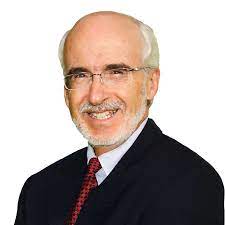

1) What is the Candidate’s view on the impact of COVID-19 on small business, and what are your priorities in supporting regional economic recovery? What role should vaccine passports play in that recovery?
Answer: The impact of the government’s COVID-19 policies on small business has been fatal for some and very harmful to many who have managed to survive. I word the previous sentence the way I do because COVID-19 itself has not been an unusually big problem. Unlike the bubonic plague that struck Europe and Asia in the mid-1300s, killing almost a third of Europe’s population, COVID-19 hasn’t really impacted Canada’s overall year to year death rate from all causes. This is because most of the people who have died of Covid-19 were already frail and at the end of their life (average age of death from Covid 19 is something like 83), and would have died of something over the course of the next few months anyway. In light of this reality, my priority in supporting regional economic recovery is to combat the fear mongering covid propaganda with actual data and push for the end of the government’s crippling lockdowns and other oppressive policies. (For documented evidence for my statements see: jccf.ca; druthers.net; thehighwire.com; americasfrontlinedoctors.org; lifesitenews.com; vaccinechoicecanada.com; theepochtimes.com and rebelnews.com)
Vaccine passports are morally wrong and are going to harm the businesses that implement them. What small business can afford to turn away customers? A significant number of people are not willing to take an experimental injection when the risk of dying from Covid is so small. Businesses who implement vaccine passports will lose not only unvaccinated customers but a significant number of people who have reluctantly (under duress) accepted the vaccine, but who empathize with the unvaccinated and disagree with the government’s coercive measures.
2) Our region is now experiencing a labour crisis, with over 600 job vacancies at Blue Mountain Village alone, and help wanted signs in almost every storefront and restaurant. Our area is attracting a lot of tourists but is increasingly unable to find and retain the staff necessary to accommodate the demand or to operate for full service hours. Directly influencing that crisis is another one, a widespread shortage of the affordable housing necessary for employees, families and seniors to enjoy a reasonable cost of living here. How would the Candidate address these corollary issues of labour and housing shortages?
Answer: From what I can see there are two main factors driving the labour shortage. One is fear of Covid-19. Some people are so afraid of catching it that they refuse to take work that would expose them to other people. The answer to this is to combat the misleading fear mongering coming from the mainstream media and our governments. Truth is the antidote to this unnecessary and unwarranted fear. The second factor is government handouts. I think a good number of able bodied people are staying home because they are getting almost as much money from the government for doing nothing as they would get if they got a job. The answer to this problem is to cut off government handouts to able bodied people. Hunger is a great motivator.
Regarding affordable housing, the government shouldn’t get into the business of building affordable housing, but it should remove obstacles so that it’s viable for businesses and not for profits to do so. To compliment this, elimination of carbon taxes will put money back in everyone’s pockets and help provide additional funds for down payments. Also, putting a stop to reckless government spending will help to curb inflation which will help preserve the value of money being set aside for a down payment.
3) With such a diverse business community in our region (agriculture, tourism/ service industries, construction/ trades, information/ professional services, etc.), how would the Candidate represent business interests in rural areas like ours in ways that support all of our sectors? What steps would the Candidate take to resolve the rural internet service challenges affecting this area?
Answer: Regarding the first question, I would fight for the elimination of all lockdowns and related oppressive and ineffective protocols, as it’s primarily these government policies that are strangling our businesses. I would fight for the elimination of carbon taxes which drive the cost of everything up. I believe the best thing the government can do is get out of the way, remove unnecessary red tape and bureaucracy, and let business owners get on with building their businesses and creating jobs. Regarding rural internet service challenges, I would meet with internet providers and find out what the obstacles are to rolling out internet infrastructure in this area. Wherever possible I would seek to remove the obstacles and facilitate solutions that would be funded by business, not the government. We need less government debt, not more.
The BMCC thanks all the candidates for their responses